




Health & Education
We all want the best care possible for our horses. The Heath & Education section covers both Learning Institutions, Organizations as well as many sources for equine assistance including Veterinarians and Farriers.
For those who want a to formally study horses, the Education section includes College Riding, Equine Studies, and Veterinary Schools. Learn about the wide variety of horses in the Horse Breeds section. Supplements and Treatments Therapy are also included in the section.
Everyone can learn from Fine Art and there are some specialty Museums that might surprise you.
Horses as a therapy partner enrich the lives of the disabled. These facilities are listed in our Therapeutic Riding section. To help children and young adults build confidence and grow emotionally, please see the resources available on the Youth Outreach page.
Looking for a place to keep your horse? You can find it in the Horse Boarding section. Traveling? Find a Shipping company or Horse Sitting service if your horse is staying home!
Want to stay up to date with the latest training clinics or professional conferences? Take a look at our Calendar of Events for Health & Education for the dates and locations of upcoming events.
Do we need to add more? Please use the useful feedback link and let us know!
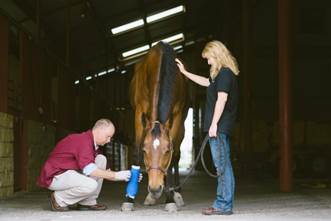
At some point, nearly every horse will need a leg wrap or bandage. However, an inappropriate bandage application can cause as many problems as a well-applied bandage can prevent. The key to successful bandaging begins with the proper materials and application. So, before you reach for the nearest roll of Vetrap, review some basic principles behind bandaging and wrapping legs:
- Evaluate Need
- Providing support for tendons and ligaments during strenuous workouts
- Preventing or reducing swelling after exercise or injury
- Protecting legs from impact
- Shielding wounds from contamination and assisting in healing1
For more severe cases or if you are in doubt, it’s always wise to consult your veterinarian when determining bandaging needs.

Dr. Kenton Morgan, senior veterinarian, Equine Technical Services, Zoetis, shares his answers to some of the most common questions horse owners have about controlling parasites.
Q: When is the best time to deworm my horse?
A: Horse owners need to take advantage of the environment and deworm when parasite levels can be at their highest — during the spring and fall — per American Association of Equine Practitioners (AAEP) guidelines. Horses at greater risk may need more frequent anthelmintic, or deworming, treatments. Spring is the best time to treat for encysted small strongyles (strongyles in the larval stage). Quest® Gel is a broad spectrum anthelmintic that with just a single dose, effectively treats and controls encysted small strongyles, bots and roundworms. A recent study shows Quest is nearly twice as effective in reducing egg counts as a double dose treatment of fenbendazole for five consecutive days.1
Q: How important is dosing to an accurate horse weight?
A: For your horse’s safety, and decreased risk for contributing to parasite resistance, it’s important to dose to your horse’s weight when deworming. Both under- and overdosing can contribute to safety and resistance issues. Download the Horse Weight Calculator mobile application from Zoetis to easily determine your horse’s weight.
- EIE Exclusive Interview with Heather Kitching of Angrove Stud, UK, Home of the Tobiano Racehorse
- In Hot Pursuit of Thoroughbred and Quarter Horse High Colors
- Spring Grass Safety - A Review
- Must-Haves for Your Equine First-Aid Kit
- Tracking Down the Tobiano Legend
- Orphan Foals: Success is Possible
- Health, Horses, Healing and Hippocrates
- Broodmare Nutrition During Late Gestation
- ‘Anonymous Horses’: Kill Pen Rescues Come With Serious Health Risks
- Introducing the Rare, Colorful and Beautiful Knabstrupper Breed
- Horse Speak: The Equine-Human Translation Guide
- A Breed from the Appalachian Mountains, Introducing the Mountain Pleasure Horse!
- UHC Gelding Clinics 2017
- Walkaloosa Horses and Their Colorful Coats
- The Morgan Horse: America's First Breed
- Big, Black and Beautiful! The History of the Majestic Friesian Horse
- Unwanted Horse Coalition Releases New Operation Gelding Program Policies for 2017
- Introducing the Trakehner: The Oldest of Warmblood Breeds
- Profiling the American Quarter Horse, A Very Versatile Breed
- Small but Mighty! See the Benefits of Feed Balancers