



Health & Education
We all want the best care possible for our horses. The Heath & Education section covers both Learning Institutions, Organizations as well as many sources for equine assistance including Veterinarians and Farriers.
For those who want a to formally study horses, the Education section includes College Riding, Equine Studies, and Veterinary Schools. Learn about the wide variety of horses in the Horse Breeds section. Supplements and Treatments Therapy are also included in the section.
Everyone can learn from Fine Art and there are some specialty Museums that might surprise you.
Horses as a therapy partner enrich the lives of the disabled. These facilities are listed in our Therapeutic Riding section. To help children and young adults build confidence and grow emotionally, please see the resources available on the Youth Outreach page.
Looking for a place to keep your horse? You can find it in the Horse Boarding section. Traveling? Find a Shipping company or Horse Sitting service if your horse is staying home!
Want to stay up to date with the latest training clinics or professional conferences? Take a look at our Calendar of Events for Health & Education for the dates and locations of upcoming events.
Do we need to add more? Please use the useful feedback link and let us know!
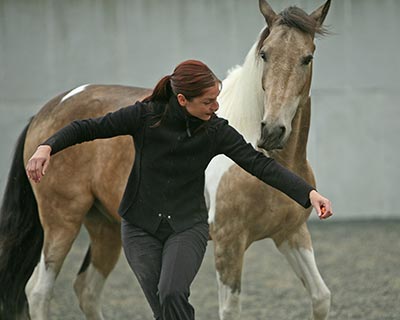
by Paula Josa-Jones
One of my teachers, the horseman Mark Rashid, is a black belt Aikido master and guides his students from the perspective that riding, like Aikido, is hard because you have to change yourself, and that it works well if you get yourself right. Through my life as a dancer and a choreographer—and a horsewoman—I’ve discovered how body-mind practices can help you get yourself right, so that when you are with your horse, you can listen to him and approach him from a place of generous and good intention, as well as an active awareness of what and how we are communicating from moment to moment.
Learning to connect with horses in this way teaches us how to develop our inner selves, become more comfortable in our own skin, be more trustworthy to ourselves and others, and gain greater skill, sensitivity, and resilience in social communication. This benefits our personal and work lives, sometimes in profound ways. Horses can help soften physical resistance and open wells of enthusiasm and creativity. Horses can help us learn that losing and finding balance is an integral part of life’s dance. That we can, like surfers, find, lose, and re-find balance on the crests and troughs of even the biggest waves, the most turbulent emotional and physical waters. They can help us to release our fears, our hesitancy, and become comfortable “on the edge,” where answers and inspiration arise spontaneously from an open, curious, and attentive mind and body.
Read more: How “Let’s Do It!” Can Change Your Horse Business…and Your Horse
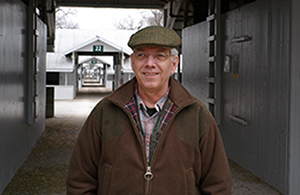
By Marion E. Altieri for EIE
The National Science Foundation (NSF) doesn't give out grant money for research in the arena of animal health very often. Most of the millions of dollars that they distribute are allocated for studies in sciences, including medicine, that will benefit human health and welfare. Lexington equine veterinarian, Dr. David Nash, saw a need in horse health, and set forth to design and deliver PathTracker. The device has the potential to change not only equine health practice, but the future of human medicine, as well.
Dr. Nash and his team of scientists and engineers' PathTracker is a breakthrough so visionary, so insightful, that indeed the possibilities cross between the worlds of equine health and the future of allopathic medicine for humans. This is the sort of research and product that, 50 years ago, was envisioned only by Gene Roddenberry when first he conceived of the Universe through his own imagination via "Star Trek." (Tricorders in "Trek," used for communication and scanning patients for disease, became our smartphones and now—now have developed into Dr. Nash's PathTracker.)
The NSF received the grant application for PathTracker, and saw that this great work will move human medicine forward by leaps and bounds—and thereby granted the team a three-year grant in the amount of $999,950. The figure is astronomical—but the NSF recognizes that this project is not static, rather will advance science in ways that even the inventors may not realize yet. That which began as an advancement in equine medicine will one day become a lifesaver for thousands of humans, all around the world.
- Fall Equine Wellness: What Your Horse Needs
- The Effect of Minerals on the Insulin Resistance (IR) Horse
- Hurricane Harvey and Irma Horse Rescues
- Texas’ Horseback Emergency Response Team: Helping Hands and Horse, in the (Literal) Trenches
- What You Need to Know: Equine Leg Bandaging
- Quick Tips: Q&A: Controlling Parasites in Horses
- EIE Exclusive Interview with Heather Kitching of Angrove Stud, UK, Home of the Tobiano Racehorse
- In Hot Pursuit of Thoroughbred and Quarter Horse High Colors
- Spring Grass Safety - A Review
- Must-Haves for Your Equine First-Aid Kit
- Tracking Down the Tobiano Legend
- Orphan Foals: Success is Possible
- Health, Horses, Healing and Hippocrates
- Broodmare Nutrition During Late Gestation
- ‘Anonymous Horses’: Kill Pen Rescues Come With Serious Health Risks
- Introducing the Rare, Colorful and Beautiful Knabstrupper Breed
- Horse Speak: The Equine-Human Translation Guide
- A Breed from the Appalachian Mountains, Introducing the Mountain Pleasure Horse!
- UHC Gelding Clinics 2017
- Walkaloosa Horses and Their Colorful Coats