





Health & Education
We all want the best care possible for our horses. The Heath & Education section covers both Learning Institutions, Organizations as well as many sources for equine assistance including Veterinarians and Farriers.
For those who want a to formally study horses, the Education section includes College Riding, Equine Studies, and Veterinary Schools. Learn about the wide variety of horses in the Horse Breeds section. Supplements and Treatments Therapy are also included in the section.
Everyone can learn from Fine Art and there are some specialty Museums that might surprise you.
Horses as a therapy partner enrich the lives of the disabled. These facilities are listed in our Therapeutic Riding section. To help children and young adults build confidence and grow emotionally, please see the resources available on the Youth Outreach page.
Looking for a place to keep your horse? You can find it in the Horse Boarding section. Traveling? Find a Shipping company or Horse Sitting service if your horse is staying home!
Want to stay up to date with the latest training clinics or professional conferences? Take a look at our Calendar of Events for Health & Education for the dates and locations of upcoming events.
Do we need to add more? Please use the useful feedback link and let us know!
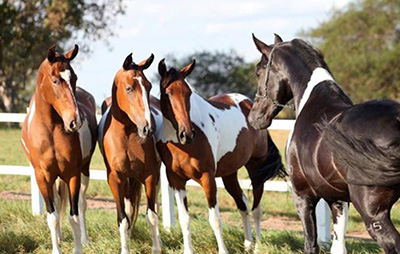
by Patricia N. Saffran
Tobiano is a striking large white spotted coat pattern. Also called pinto, meaning painted in Spanish, the pattern is very old. Tobiano was one of the horse colors to come out of the expansion of coat colors during the Bronze Age in the Eurasian Steppe. Horses had been black or bay/dun, and then at this time, they started to appear in a variety of colors. This period was when some scientists believe that horses were domesticated, or alternatively, it was when horse domestication spread to Europe and Asia. Natural selection is a possible reason for the proliferation of color coats.
The name tobiano comes from the 1800s in Brazil. The question is how did pintos in Brazil come to be known as tobiano? Most sources offer cockeyed and incomplete explanations. The genotype for Tobiano (TO) color remained a mystery until it was discovered in 2007.
Samantha A. Brooks, PhD, Assistant Professor of Equine Physiology, Dept. of Animal Sciences, University of Florida, Gainesville, Brooks, who discovered the Sabino 1 genotype (SB1) variant (a white patterning), also worked on the Tobiano genotype. She discovered that the Tobiano gene is governed by a large chromosomal inversion on chromosome 3 near the KIT gene (responsible for white patterning). This inversion is only found in Tobiano horses, and it occurred around 3000 BC, at the time of the proliferation of horse colors.
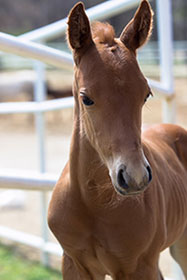
With proper nutrition and veterinary support, orphan foals can become healthy, thriving adults.
Spring is here and so is peak foaling season. While an exciting time with frolicking foals, having a plan for the unexpected can help alleviate stress in case a mare is unable to care for her baby. To help orphan foals through the tough early stages of life, experts at the Purina Animal Nutrition Center have developed an emergency feeding program.
“As foals age, their nutrition requirements change rapidly,” says Karen E. Davison, Ph.D., director & nutritionist with Equine Technical Solutions at Purina Animal Nutrition.
Ensure orphan foals receive the best nutrition by following these recommendations:
Day 1
It’s important to feed colostrum to the foal within the first two hours of life.
“Colostrum, or “first milk,” provides antibodies needed to build a foal’s immune system and fight diseases,” explains Davison. “After 18 to 24 hours, foals can no longer absorb antibodies in colostrum.”
Check with your veterinarian to discuss the need for any medications or vaccines and if the newborn has the proper immunoglobulin levels.
- Health, Horses, Healing and Hippocrates
- Broodmare Nutrition During Late Gestation
- ‘Anonymous Horses’: Kill Pen Rescues Come With Serious Health Risks
- Introducing the Rare, Colorful and Beautiful Knabstrupper Breed
- Horse Speak: The Equine-Human Translation Guide
- A Breed from the Appalachian Mountains, Introducing the Mountain Pleasure Horse!
- UHC Gelding Clinics 2017
- Walkaloosa Horses and Their Colorful Coats
- The Morgan Horse: America's First Breed
- Big, Black and Beautiful! The History of the Majestic Friesian Horse
- Unwanted Horse Coalition Releases New Operation Gelding Program Policies for 2017
- Introducing the Trakehner: The Oldest of Warmblood Breeds
- Profiling the American Quarter Horse, A Very Versatile Breed
- Small but Mighty! See the Benefits of Feed Balancers
- Is My Hay Green Enough?
- Britain's Oldest Horse Breed in Battle for Survival
- Moriesians: Friesians and Morgans
- Horsemanship and Behavior
- Akhal-Teke, a Horse Like Shimmering Gold
- Six Ways to Feed Performance Horses for Greater Achievement