




Health & Education
We all want the best care possible for our horses. The Heath & Education section covers both Learning Institutions, Organizations as well as many sources for equine assistance including Veterinarians and Farriers.
For those who want a to formally study horses, the Education section includes College Riding, Equine Studies, and Veterinary Schools. Learn about the wide variety of horses in the Horse Breeds section. Supplements and Treatments Therapy are also included in the section.
Everyone can learn from Fine Art and there are some specialty Museums that might surprise you.
Horses as a therapy partner enrich the lives of the disabled. These facilities are listed in our Therapeutic Riding section. To help children and young adults build confidence and grow emotionally, please see the resources available on the Youth Outreach page.
Looking for a place to keep your horse? You can find it in the Horse Boarding section. Traveling? Find a Shipping company or Horse Sitting service if your horse is staying home!
Want to stay up to date with the latest training clinics or professional conferences? Take a look at our Calendar of Events for Health & Education for the dates and locations of upcoming events.
Do we need to add more? Please use the useful feedback link and let us know!
Kathleen Gustafson, PhD and Eleanor M. Kellon, VMD
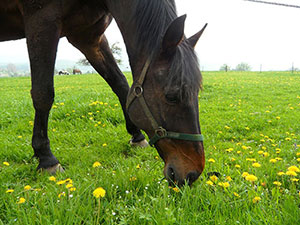
The ECIR Group has improved the welfare of equines with metabolic disorder by focusing on prevention and treatment of Laminitis. The US alone has almost 10 million horses. The most current estimates are that 10% to 15% of horses will suffer from Laminitis every year, with 80% to 90% of the cases caused by endocrine disease. On average, that is 1 million horses per year in the US alone.
They recommend that Horses who cannot regulate insulin should not be grazing pasture. Owners should concern themselves with the insulin in the horse, not the fructan in the pasture.
This is ECIR Group review of an article which is largely based on the 2006 research dissertation of Dr. Bridgett McIntosh, entitled, “Circadian and Seasonal Variation in Pasture Nonstructural Carbohydrates and the Physiological Response of Grazing Horses”. The entire dissertation is publically available HERE This is an excellent resource.
By Jeff Hall, DVM, Senior Equine Technical Services Veterinarian, Zoetis
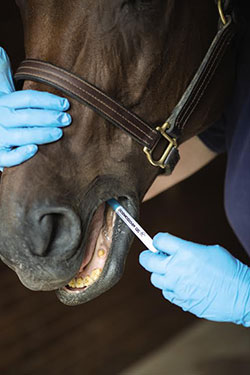
It’s the perfect day for a ride. But while unloading your horse, he quickly steps back, lifting his head high to catch on the bare metal of your horse trailer. The gash is deep. What are your next steps?
Make sure you know the best plan of action to help minimize your horse’s risk in times of emergency.
Injuries such as cuts and bruises are common with a horse’s natural curiosity and flight-or-fight response. Other types of emergencies can include colic, choke, lameness and illness. Considering such potential threats posed to your horse, your knowledge of, and access to, a first-aid kit will be crucial to help ensure his overall safety when away from immediate veterinary service.
I recommend keeping a first-aid kit in not only your barn but also your horse trailer, should you ever need quick access to supplies when traveling with your horse. Listed below are key materials to keep stocked in your kit.
- Tracking Down the Tobiano Legend
- Orphan Foals: Success is Possible
- Health, Horses, Healing and Hippocrates
- Broodmare Nutrition During Late Gestation
- ‘Anonymous Horses’: Kill Pen Rescues Come With Serious Health Risks
- Introducing the Rare, Colorful and Beautiful Knabstrupper Breed
- Horse Speak: The Equine-Human Translation Guide
- A Breed from the Appalachian Mountains, Introducing the Mountain Pleasure Horse!
- UHC Gelding Clinics 2017
- Walkaloosa Horses and Their Colorful Coats
- The Morgan Horse: America's First Breed
- Big, Black and Beautiful! The History of the Majestic Friesian Horse
- Unwanted Horse Coalition Releases New Operation Gelding Program Policies for 2017
- Introducing the Trakehner: The Oldest of Warmblood Breeds
- Profiling the American Quarter Horse, A Very Versatile Breed
- Small but Mighty! See the Benefits of Feed Balancers
- Is My Hay Green Enough?
- Britain's Oldest Horse Breed in Battle for Survival
- Moriesians: Friesians and Morgans
- Horsemanship and Behavior