





Health & Education
We all want the best care possible for our horses. The Heath & Education section covers both Learning Institutions, Organizations as well as many sources for equine assistance including Veterinarians and Farriers.
For those who want a to formally study horses, the Education section includes College Riding, Equine Studies, and Veterinary Schools. Learn about the wide variety of horses in the Horse Breeds section. Supplements and Treatments Therapy are also included in the section.
Everyone can learn from Fine Art and there are some specialty Museums that might surprise you.
Horses as a therapy partner enrich the lives of the disabled. These facilities are listed in our Therapeutic Riding section. To help children and young adults build confidence and grow emotionally, please see the resources available on the Youth Outreach page.
Looking for a place to keep your horse? You can find it in the Horse Boarding section. Traveling? Find a Shipping company or Horse Sitting service if your horse is staying home!
Want to stay up to date with the latest training clinics or professional conferences? Take a look at our Calendar of Events for Health & Education for the dates and locations of upcoming events.
Do we need to add more? Please use the useful feedback link and let us know!
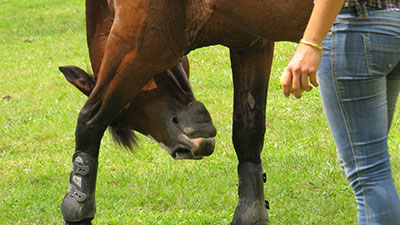
by Bonnie Marlewski-Probert
There are two mantras I lived by when training horses fulltime:
“Never pick a fight unless you know you can win the battle and P.S. if you get into a physical fight with a horse, you will never win that battle.
Training horses is a thinking man’s sport. You don’t have to be the smartest guy in the world but you must always be smarter than the horse you are working with.” Bonnie Marlewski-Probert.
The four key elements that every successful trainer must have are:
1. Time. Anytime you attempt to train your horse without allowing plenty of time, the temptation to rush is sure to sabotage your progress and cost you more time in the long run,
2. Always have a Plan A and a Plan B. The trick to training horses successfully is to think through what you want to accomplish and get a plan A and a Plan B in your head as to how you are going to achieve that goal, just in case Plan A fails.
3. Patience. Rome wasn’t built in a day and I know of no horse or husband that was trained in a day! Sometimes, the greatest successes come inch by inch, day-by-day. Remember that as you train various elements of a new skill, those same elements will come into play in many more advanced moves so, by taking your time and focusing on teaching the elements of a larger maneuver, you are actually shortening the learning curve for more advanced moves that you will be training down the road. This is what I call “elemental training.” Teaching the elements and then putting them all together to create the new skill.
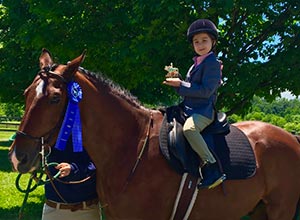
by Heather Wallace
Equestrian and Otherwise -This was easy for me to write but extremely difficult to share. My daughter insisted it would help others and was determined that I share her story. After all, she's that the kind of person. Cameron is special, as all children are in their own way. She is sassy, confident, and intelligent.
She also has cerebral palsy.
We don’t know when she had the stroke, or “brain bleed” as she calls it, but she was diagnosed at 18 months old. She met every developmental milestone and can do anything. The only difference is she has to work harder than others.
For those who are unfamiliar with cerebral palsy, here is an definition from the Cerebral Palsy Alliance:
“Cerebral palsy is an umbrella term that refers to a group of disorders affecting a person’s ability to move. It is due to damage to the developing brain either during pregnancy or shortly after birth.
Cerebral palsy affects people in different ways and can affect body movement, muscle control, muscle coordination, muscle tone, reflex, posture and balance. Although cerebral palsy is a permanent life-long condition, some of these signs of cerebral palsy can improve or worsen over time.”
There are many pediatric stroke survivors in the world, although it is rarely discussed. Cameron has never known a different life. While she may get frustrated at times, especially as she gets older, she is a fighter. Good luck to the person who tries to tell her what to do.
- Horse Training: 7 Essential Steps for Safely Handling Your Horse's Feet
- Kinesiology Taping for Horses—It’s a Thing!
- AVMA Proposes Elimination Of Farrier Exemption From Veterinary Practice Act
- The Keys to Building Confidence in Your Horse from a Master Liberty Trainer
- What is a Shagya-Arabian?
- New Year’s Resolutions for the Senior Horse Owner
- Understanding Cold-Induced Laminitis
- Keeping Your Horse Calm Naturally During Stall Rest
- How “Let’s Do It!” Can Change Your Horse Business…and Your Horse
- Dr. David Nash and NSF Grant Moves Equine Medicine into the Future, with Wide-Ranging Visions for Human Use, as Well
- Fall Equine Wellness: What Your Horse Needs
- The Effect of Minerals on the Insulin Resistance (IR) Horse
- Hurricane Harvey and Irma Horse Rescues
- Texas’ Horseback Emergency Response Team: Helping Hands and Horse, in the (Literal) Trenches
- What You Need to Know: Equine Leg Bandaging
- Quick Tips: Q&A: Controlling Parasites in Horses
- EIE Exclusive Interview with Heather Kitching of Angrove Stud, UK, Home of the Tobiano Racehorse
- In Hot Pursuit of Thoroughbred and Quarter Horse High Colors
- Spring Grass Safety - A Review
- Must-Haves for Your Equine First-Aid Kit