




Health & Education
We all want the best care possible for our horses. The Heath & Education section covers both Learning Institutions, Organizations as well as many sources for equine assistance including Veterinarians and Farriers.
For those who want a to formally study horses, the Education section includes College Riding, Equine Studies, and Veterinary Schools. Learn about the wide variety of horses in the Horse Breeds section. Supplements and Treatments Therapy are also included in the section.
Everyone can learn from Fine Art and there are some specialty Museums that might surprise you.
Horses as a therapy partner enrich the lives of the disabled. These facilities are listed in our Therapeutic Riding section. To help children and young adults build confidence and grow emotionally, please see the resources available on the Youth Outreach page.
Looking for a place to keep your horse? You can find it in the Horse Boarding section. Traveling? Find a Shipping company or Horse Sitting service if your horse is staying home!
Want to stay up to date with the latest training clinics or professional conferences? Take a look at our Calendar of Events for Health & Education for the dates and locations of upcoming events.
Do we need to add more? Please use the useful feedback link and let us know!
by Christoph Hess
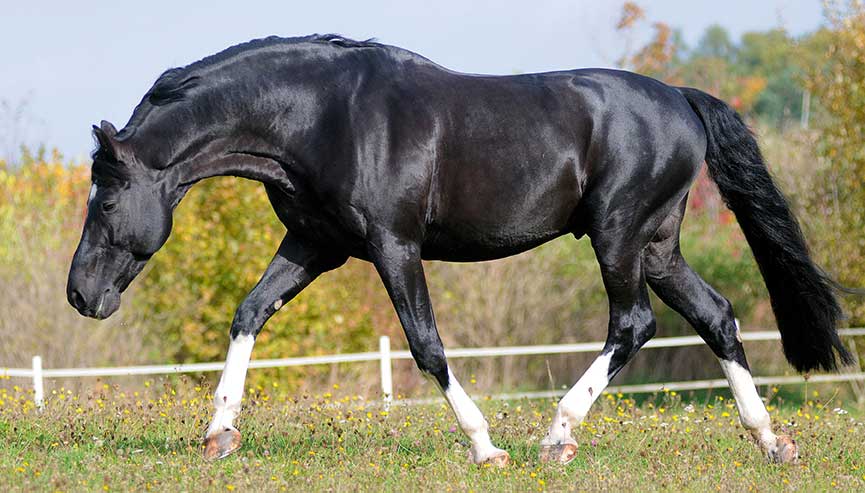
Correctly stretching a horse is one of the most significant elements of training. Having said that, only a horse that is engaged from behind and stepping up actively is going to be able to adapt a correct long and low position. There are ways that a rider can support this process.
The “long and low” stretch is a significant factor in the training of every young horse—regardless of use or discipline…. It should be a matter of course that the rider should always have the stretching of her horse in mind as a primary goal.
Horses Want to Stretch
By observing horses in nature, we can see that they regularly move rhythmically, with true relaxation, and that they accomplish this by stretching their necks to maintain good balance. The image of a horse moving this way, completely free, is something we should never forget. We should ask ourselves much more frequently: what does this imply in terms of training our horses? The answer can only be this: horses want—inherently want—to move with a stretched neck, as this is the only position that makes sense biomechanically and economically. Last but not least, this position enables movement.
by Samantha Armbruster
It’s easy to be overly hard on yourself when you live and breathe in the subjective horse industry. When as little as half of a point can separate first and second place, riders are left wondering what could have been if they only could have done something just a little different. Beating yourself up over past rides or performances is not going to prolong your future or change anything. However, we can all take lessons on how to be a little kinder to ourselves along the way. Staying positive throughout it all can make a huge difference. Here are ten things to keep in mind when attempting to not be so hard on yourself.
1. Your Mistakes Are Made For Learning
No one is perfect every time out, one hundred percent of the time. Even the top professionals make mistakes every now and then, but what we do with those mishaps can either make us into better riders, or they can leave us upset and angry. Reflection is a powerful tool that can be used to learn from past mistakes. Every mistake that has been made can be used as a guide in the future. Win or lose, you can always learn and improve the next time out.
Read more: Don’t Be So Hard On Yourself; 10 Ways to Stay Positive About Showing
- 3 Tips for Horse Riding With Epilepsy (and Confidence)
- Physical Signs of Damage Caused by Ill-Fitting Saddles
- Conception Failure in Mares: Seven Causes
- Horses Blink Less, Twitch Eyelids More When Stressed, U of G Researchers Find
- Maintain Your Horse’s Safety This New Year's Eve
- Caring for “Winter Woolies”
- Equestrian Programs Benefit Veterans
- New Allergens Associated with Severe Equine Asthma
- Testing a New Therapy for Horses Struggling to Breathe
- Minerals and the EMS Equine
- Straight From the Horse’s Mouth: Equine Dentistry Basics
- Nutrition for the Pregnant Mare
- Monty Roberts: I Don’t Want My Students to Be As Good As Me
- How to Choose the Right Farrier for Your Horse
- What Horses Like
- 3 Ways to Learn to Ride Better - An Excerpt from Two Brains, One Aim
- Older Horses Need Supplemental Vitamin C
- The Resistance – Equine Parasites Rise Up
- Laminitis: A Year-Round Concern
- Quality Care for Tendons and Ligaments