




Health & Education
We all want the best care possible for our horses. The Heath & Education section covers both Learning Institutions, Organizations as well as many sources for equine assistance including Veterinarians and Farriers.
For those who want a to formally study horses, the Education section includes College Riding, Equine Studies, and Veterinary Schools. Learn about the wide variety of horses in the Horse Breeds section. Supplements and Treatments Therapy are also included in the section.
Everyone can learn from Fine Art and there are some specialty Museums that might surprise you.
Horses as a therapy partner enrich the lives of the disabled. These facilities are listed in our Therapeutic Riding section. To help children and young adults build confidence and grow emotionally, please see the resources available on the Youth Outreach page.
Looking for a place to keep your horse? You can find it in the Horse Boarding section. Traveling? Find a Shipping company or Horse Sitting service if your horse is staying home!
Want to stay up to date with the latest training clinics or professional conferences? Take a look at our Calendar of Events for Health & Education for the dates and locations of upcoming events.
Do we need to add more? Please use the useful feedback link and let us know!

Timing is everything. Nowhere is this more relevant than when preparing an elite equine athlete for a race.
Thoroughbred trainers are critically aware of the importance of fine-tuning the feeding and exercise regimes of their charges in the months, weeks and days before a big event. Timing is also critical for the smooth functioning of a horse’s musculo-skeletal system for optimal performance.
Understanding how the horse’s muscle physiology works in synchrony with its environment and reacts to the exercise regimes that we subject it to in our daily management has been the focus of much research at University College Dublin by Dr. Barbara Murphy and her team.
All animals possess an internal body clock that ensures functions such as muscle metabolism, digestion and tissue regeneration and repair peak at the most suitable time of day to ensure survival in the wild. This important system, called the circadian system, uses the continuous 24-hour transitions from night to day to generate rhythms in physiology and behavior that allow a horse to stay in harmony with its environment.
Each organ in the horse’s body undergoes rhythmical 24-hour changes that respond to the environmental cues provided by the changing light-dark cycle, food availability and exercise. How we time feeding, and in particular, exercise, has important implications for equine performance and will be explored here.
Domestication has changed many aspects of a horse’s daily life. To understand the impact human intervention has had on the horse’s body clock we must first consider their natural behavior. As migrating herd animals bound by tight social bonds, horses evolved to spend up to 18 hours a day grazing as a group constantly on the move, covering anywhere from 40 -100 km in a day.
Now consider the lifestyle of today’s thoroughbreds in training – stabled for up to 23 hours a day, isolated from a herd, fed concentrated feed at set intervals and often only exercised once per day at the same time each day. Each of these factors is accompanied by impacts on a horse’s health and performance.
Gastric ulcers, respiratory disorders and stereotypic behaviors are some of the common challenges faced by trainers and are often a direct consequence of an intensive indoor management regime – a necessary evil in the business of training elite athletes.
Read more: The Effects of Routine Morning Exercise on Muscle Response
by Adam Lusher
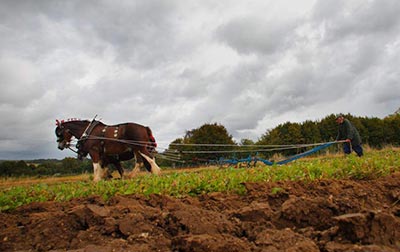
The breed that inspired War Horse and George Orwell is in danger of disappearing from Britain, a conservation charity warns. Having served faithfully in peace and war, they have become probably Britain’s three favourite breeds of working horse. Now, however, the Shire Horse, Suffolk Punch, and Clydesdale are in danger of becoming extinct in the UK.
The Rare Breeds Survival Trust (RBST), a charity dedicated to the conservation of farm animals, has warned that unless urgent action is taken, all three varieties of working horse could disappear from the British landscape within ten years.
Read more: Is the Great British Shire Horse About to Go Extinct?
- Red Light at Night Facilitates Recovery and Rest
- Breathing Easy: A Key to Equine Health and Performance
- Alfalfa and the Insulin Resistant Horse - The True Story
- Burning And Learning?
- The Canadian Horse: Discover a Versatile Breed Rich in History
- Core Equine Disease Risks Increase Amid Mosquito Season
- Equilume Stable Light Can Influence Body Composition and Biological Rhythms in Horses-in-training
- Inflammation: It’s Not Just In Joints
- Horsepower: How Digital Technology is Transforming the Equine World
- Exercising and Training Horses in Hot Weather
- Choose Hemp Instead of Soy for Your Horse!
- Equine Odontoclastic Tooth Resorption and Hypercementosis
- What is the Ideal Conditioning Program for an Eventer?
- Is Your Horse a Slave in a Sand Box?
- Surprise! It's Twins!
- Dental Surgery and Extractions
- A Rejected Foal and a Brokenhearted Mare Saved Each Other
- Miniature Horse Therapy: Great Big Good Things in Small Packages
- Man O’ War Project Helping the Soldiers of War Heal
- Is Icing Still a Valid Treatment for Injuries?