





Health & Education
We all want the best care possible for our horses. The Heath & Education section covers both Learning Institutions, Organizations as well as many sources for equine assistance including Veterinarians and Farriers.
For those who want a to formally study horses, the Education section includes College Riding, Equine Studies, and Veterinary Schools. Learn about the wide variety of horses in the Horse Breeds section. Supplements and Treatments Therapy are also included in the section.
Everyone can learn from Fine Art and there are some specialty Museums that might surprise you.
Horses as a therapy partner enrich the lives of the disabled. These facilities are listed in our Therapeutic Riding section. To help children and young adults build confidence and grow emotionally, please see the resources available on the Youth Outreach page.
Looking for a place to keep your horse? You can find it in the Horse Boarding section. Traveling? Find a Shipping company or Horse Sitting service if your horse is staying home!
Want to stay up to date with the latest training clinics or professional conferences? Take a look at our Calendar of Events for Health & Education for the dates and locations of upcoming events.
Do we need to add more? Please use the useful feedback link and let us know!
by Becky James, BSc, MSc
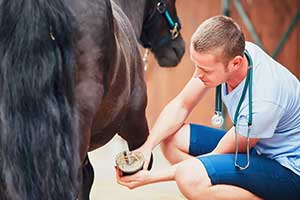
Despite a long-standing belief that laminitis is a spring-time disease, a recent study identified that there is no ‘safe’ season: laminitis remains a threat regardless of the time of year. The same study (1) also revealed that 1 in 10 horses/ponies develop laminitis every year.
When to Worry?
As horse owners, we must remain cautious and not reduce preventive measures when the perceived spring ‘high-risk’ period is over. Furthermore, the study highlights the importance of recognizing subtle signs of potentially life-threatening episodes.
This is supported by 2017 study published in the BEVA Equine Veterinary Journal (2) which revealed 45% of owners did not suspect laminitis was the problem prior to veterinary diagnosis, making it critical to recognize the more subtle signs.
by Dr. Eleanor Kellon
Tendons and ligaments play critical roles in the musculoskeletal system. Feed them well and treat them kindly.
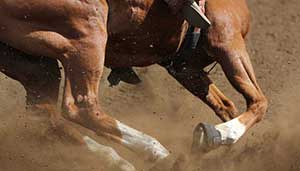
Tendons and ligaments are specialized forms of connective tissue. Tendons connect muscle to bone. Ligaments are anchored on bone at both ends. Both are composed of interwoven strands of type I collagen protein in a structure much like a rope. They are built to resist stretch, but both structures do stretch.
Tendons facilitate movement by pulling on bones when a muscle contracts. Stretching that occurs (e.g. when the fetlock drops during weight bearing) has an effect similar to pulling on a rubber band. When the stretch is released, the tendon snaps back to its original length, and this assists the pull of the muscle.
Ligaments are meant to restrict movement. They are able to dissipate their stress because they contain strands of elastin, a protein which can deform then resume its original shape.
Overstretching can damage any tendon or ligament. Fatigue and working in deep footing are further risk factors, as are toe grabs or overly long toes and shoes with bars or heel extensions that delay breakover. Age and PPID (Cushing's disease) also weaken these structures.
- Feeding Flaxseeds: Do you have all the facts?
- 5 Red Flags You Should Not Ignore When Horse Shopping (And How to Address Them)
- The Secret to Healthy Horses? Keep it Simple!
- Horse Health: Equine Influenza and How to Minimize Your Risk
- Managing Horses in Hot Weather
- Ketogenic Diet for Horses? Pass
- The Right Way to Dose Electrolytes
- Muzzle Adjustments May Prevent Teeth Damage
- 12 Stretches to Release Lower Back and Hip Pain In Riders
- Horse Health: You Can Lead a Horse to Water…
- Is it Time to Change Bits?
- Maintain Your Horse’s Safety This Fourth of July
- Health and Exercise Science student research in equine therapy
- 10 Facts About Equine West Nile Virus
- Tracking Five Millennia of Horse Management with Extensive Ancient Genome Time Series (Part 4 of 4)
- Tracking Five Millennia of Horse Management with Extensive Ancient Genome Time Series (Part 3 of 4)
- With Wet Weather Comes A New Hoof Problem: Retracted Soles
- Tracking Five Millennia of Horse Management with Extensive Ancient Genome Time Series (Part 2 of 4)
- Tracking Five Millennia of Horse Management with Extensive Ancient Genome Time Series (Part 1 of 4)
- Breeding: Make Sure You Cover the Basics!