



Health & Education
We all want the best care possible for our horses. The Heath & Education section covers both Learning Institutions, Organizations as well as many sources for equine assistance including Veterinarians and Farriers.
For those who want a to formally study horses, the Education section includes College Riding, Equine Studies, and Veterinary Schools. Learn about the wide variety of horses in the Horse Breeds section. Supplements and Treatments Therapy are also included in the section.
Everyone can learn from Fine Art and there are some specialty Museums that might surprise you.
Horses as a therapy partner enrich the lives of the disabled. These facilities are listed in our Therapeutic Riding section. To help children and young adults build confidence and grow emotionally, please see the resources available on the Youth Outreach page.
Looking for a place to keep your horse? You can find it in the Horse Boarding section. Traveling? Find a Shipping company or Horse Sitting service if your horse is staying home!
Want to stay up to date with the latest training clinics or professional conferences? Take a look at our Calendar of Events for Health & Education for the dates and locations of upcoming events.
Do we need to add more? Please use the useful feedback link and let us know!
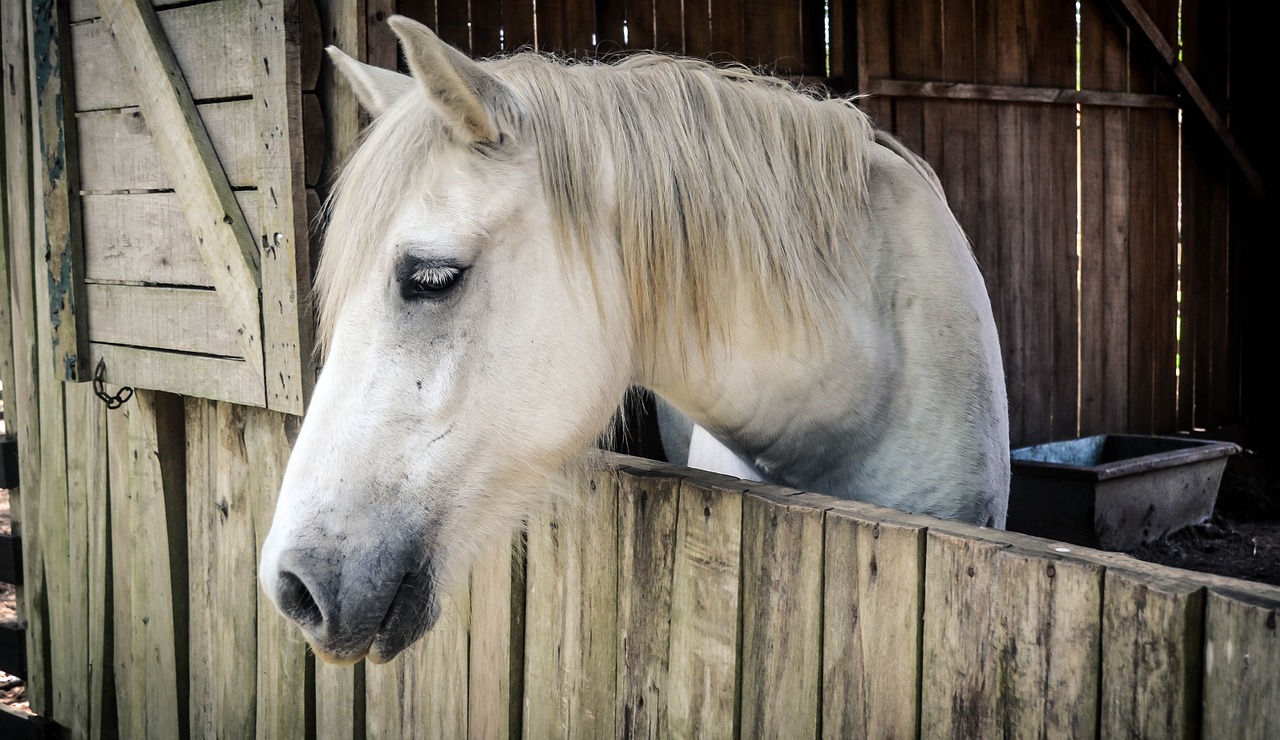
By Juliet M. Getty, Ph.D.
Magnesium – you hear about it a lot these days, particularly when it comes to treating obese horses, especially those with the telltale sign of insulin resistance – stubborn fat deposits along the crest of the neck and back, and behind the shoulders. And since magnesium is also involved with maintaining normal neuromuscular activity, supplementing it can have a dramatic impact on calming behavior, easing sensitivity, and improving muscle function and endurance.
How much?
The insulin resistant animal responds well to large amounts of supplemental magnesium[i]. However, magnesium needs to be balanced with calcium because calcium competes with it for absorption; therefore the magnesium content should be at least half that of calcium. Forages grown in areas of acidic or clay soils are typically low in magnesium. Compound this with low bioavailability, and your equine friend may be getting just enough to prevent a deficiency but not quite enough to maintain normal hormonal and nervous system functioning.
To help with regional fat deposits, I recommend supplementing magnesium to bring it in line with calcium. A 2:1 ratio of Ca:Mg is appropriate and can be as high as 1:1.
Consider this example: Your hay contains .25% magnesium and .60% calcium. Twenty pounds provides:
- 22.7 grams of magnesium (20 lb X 454 g/lb X .0025), and
- 54.5 grams of calcium (20 lbs X 454 g/lb X .0060).
Assume that only 50% of the magnesium from your hay is absorbed; therefore, only 11.35 grams of magnesium is provided by this hay. Supplement additional magnesium to bring the Ca:Mg ratio to 2:1[ii]. So in this example, you should supplement an additional 16 grams of magnesium to bring the Ca:Mg ratio into balance.
Obviously it is best to test your hay before supplementing magnesium. If this is not feasible, offer your 1000 lb horse a more conservative amount -- say 10 grams per day. Continue supplementing until you see the fat pads start to diminish (can take several months); then reduce the amount of magnesium by half.
To help with behavior or muscular issues, experiment by adding 3 to 10 grams of magnesium to the diet. Results should be seen within a week; if not, magnesium is not the issue.
Inorganic sources and absorption
Magnesium found in forages and feedstuffs is not well absorbed – only 40 to 60 percent. This has a lot to do with competition from calcium. Consequently, inorganic sources such as magnesium oxide, citrate, and sulfate have a higher absorption rate (70%) than magnesium found in natural sources.[iii] Comparisons between three inorganic sources are shown below:
|
Commonly Supplemented Inorganic Magnesium Sources and Concentrations
|
|||
|
Source |
Percent Magnesium |
Amount needed |
Comments |
|
Magnesium oxide |
56.2% |
8.9 grams |
Readily absorbed and most concentrated. |
|
Magnesium citrate |
11.0% |
45.5 grams |
Most easily absorbed but low concentration, necessitating larger amounts. |
|
Magnesium sulfate |
9.8% |
51.0 grams |
Epsom salt. Poorly absorbed and has a high laxative effect. |
Whole foods
The magnesium found in natural sources is chelated (bound) to another molecule, such as an amino acid, to facilitate absorption. While the absorption rate is slightly diminished by calcium, whole foods boost your horse’s overall diet by adding additional minerals, as well as vitamins, fats, and protein.
Whole food sources of magnesium are not nearly as concentrated as a magnesium supplement. But they can aid in reducing insulin resistance, as well as protect your horse’s nervous system and muscles. These foods are especially high in magnesium, and are listed from high to low levels (found in one cup):
- Pumpkin seeds (shelled): 1200 mg
- Flax or Chia seeds: 660 mg (high in omega 3s)
- Sesame seeds: 500 mg
- Almonds: 400 mg
- Quinoa: 340 mg (high in starch)
- Wheat germ: 275 mg (high in omega 6s)
- Split peas: 230 mg
Can you give a horse too much magnesium?
Not likely. According to the National Research Council[v], the maximum tolerable concentration is 0.8 percent. Twenty pounds of hay testing at this level would provide a whopping 72.64 grams (72,640 mg) of magnesium. The gastrointestinal tract only absorbs what the body needs and the rest is excreted in the manure. However, since the kidneys are responsible for excreting magnesium, supplements should never be given to a horse with impaired kidney function; this would result in high blood magnesium levels, leading to neuromuscular symptoms such as depressed behavior and ataxia.
Bottom line
Many horses experience a borderline deficiency of magnesium because of its poor absorption rate from forages. Regional fat deposits, indicative of insulin resistance, can be reduced through magnesium supplementation (in combination with low starch/sugar diets and exercise), offering some protection against laminitis. Neuromuscular and behavioral sensitivities can also be alleviated with added magnesium.
This article originally appeared on Getty Equine Nutrition and is published here with permission.
Find more informative articles in our section on Health & Education.
By SARAH WELK BAYNUM
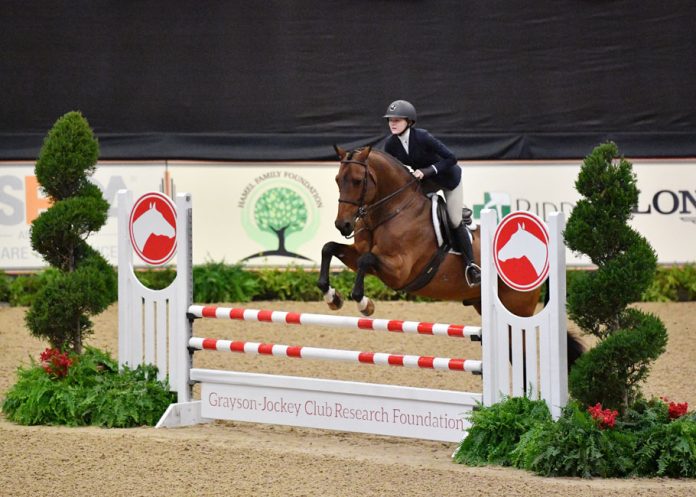
The average horse owner may not believe that the Grayson-Jockey Club Research Foundation has anything to do with them. In actuality, there are countless horses whose lives have been saved as a direct result of the group’s research.
The Grayson-Jockey Club Research Foundation was founded in the 1940’s by a group of horsemen who originally donated their first equine research grant to the University of Pennsylvania. One of the projects that is currently being researched hits close to home for performance sporthorses—namely, spinal ataxia due to neurological diseases.
The group has funded research for a wide variety of breeds and disciplines—not just those in the Thoroughbred industry. Since 1940, the Grayson-Jockey Club has provided more than $42.3 million dollars in research money and underwritten over 437 projects across 48 universities.
This year, the Grayson-Jockey Club Research Foundation board of directors announced it will fund 11 new projects, along with 13 continuing projects, with an authorized expenditure of $2,455,164.
The Diagnosis Dilemma of Spinal Cord Diseases
Other than EPM, the definitive diagnoses for the underlying cause of spinal ataxia is extremely challenging.
Neurological diseases can often be career-ending diagnoses and causes for many horses. The two leading causes of spinal ataxia are cervical vertebral compressive myelopathy (CVCM, also known as Wobbler Syndrome), and neuroaxonal dystrophy / equine degenerative myeloencephalopathy (eNAD / EDM). These two diseases are the leading causes of spinal ataxia.
eNAD / EDM results from abnormalities of certain neurons in the spinal cord and brainstem. Horses are genetically predisposed to acquiring this disease. However, environmental triggers in the form of insufficient vitamin E are also required before you see clinical signs.
Horses with eNAD / EDM have varying symptoms, ranging from mild performance issues to severe debilitation. Clinical signs commonly include incoordination, not knowing where their feet are, having an abnormal leg stance that’s too wide or too close together, difficulty with tight turns, going up hills etc. are all common.
CVCM on the other hand, is a developmental defect of the neck vertebrae that causes narrowing of the spaces in the spine. Malformation of the spine, osteochondrosis, repetitive micro-trauma, and dietary factors like copper deficiency, excessive zinc, or high carbohydrate rations can result in CVCM. Like eNAD / EDM, horses are unsteady on their feet with this disease and the symptoms can range in severity. Neck stiffness, inability to correctly place their feet, toe dragging, and decreased range of motion are also common symptoms.
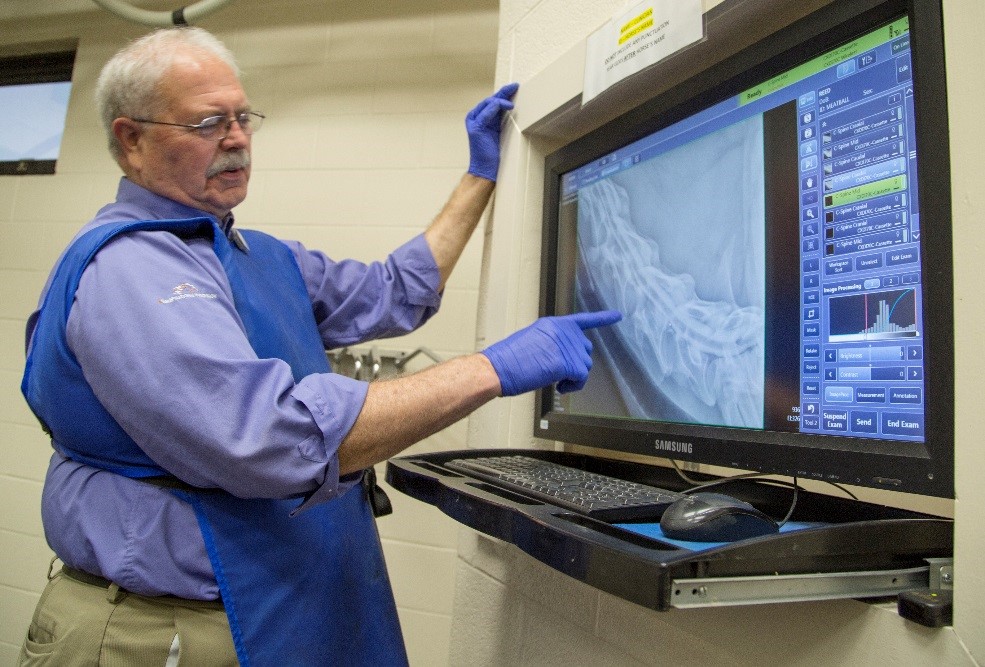
Unfortunately, CVCM and eNAD / EDM are hard to differentiate because they have such similar clinical signs. The definitive diagnosis of these diseases is challenging while the horse is alive, and is typically made after the horse is euthanized.
This is because a there is no way to truly diagnose these illnesses—there are no MRI machines large enough to accommodate the size of a horse’s neck. The current way veterinarians are diagnosing CVCM is with x-rays and CT scans.
While Warmbloods and Quarter Horses are both breeds prone to these diseases, they tend to show clinical signs quite differently. For example, Quarter Horses with eNAD / EDM will have an associated vitamin E deficiency and begin slowly showing incoordination at a young age, while Warmbloods will have a more sudden onset of incoordination and behavioral changes between 5-15 years old without this vitamin E deficiency.
Because of how challenging it is to diagnose these spinal cord diseases, it creates a stressful financial burden and a career or even life-ending decision for horse owners and trainers.
However, thanks to the current research project being done by the Grayson-Jockey Club Research Foundation, a study is being conducted that includes a highly specific and sensitive blood and spinal fluid test that can be used in conjunction with the current standard diagnostic testing.
New Developments
It is expected this study will greatly improve the diagnoses of these spinal cord diseases overall.
“Currently, a definitive diagnosis for both eNAD/EDM and CVCM can only be obtained after a horse has been euthanized. Imaging such as CT/myelogram can assist with diagnosing CVCM, but we are in need of biomarkers that can be measured in the blood or spinal fluid of horses that could help us determine which of these diseases is the most likely,” says Dr. Carrie Finno.
The investigators of this project include Dr. Finno of the University of California-Davis, Dr. Amy Johnson of the University of Pennsylvania-New Bolton Center, and Dr. Steve Reed of Rood and Riddle, KY.
Through an innovative approach, 367 proteins involved in neurologic diseases in humans were screened and defined in the blood (serum) and cerebrospinal fluid (CSF) from confirmed cases of CVCM or eNAD / EDM in Warmbloods and Quarter Horses.
Based on the results of this screening, the researchers hope to validate these findings using bench-side antibody tests from the initial sample and a group of additional confirmed cases of equine spinal cord disease.
The hypothesis is that the concentrations of five specific proteins will help them distinguish between the two diseases.
The expectation is that the concentration of certain proteins in the serum will be higher in CVCM horses as compared to those in eNAD / EDM horses and those in healthy horses. Because Quarter Horses and Warmbloods present these spinal cord diseases so differently, it’s also expected the protein concentration will be higher in eNAD / EDM Quarter Horses versus Warmbloods.
Preventing Spinal Cord Diseases
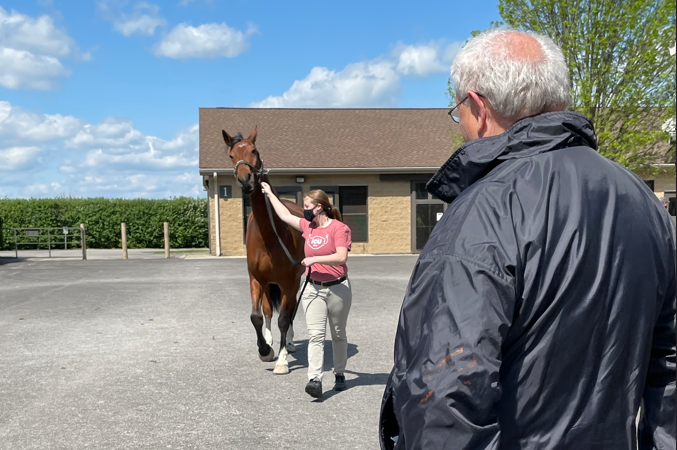
For owners who plan to breed or purchase horses susceptible to these spinal cord diseases, there are a few preventative measures they can take to decrease the odds or catch it early.
“One of the most important things that owners can do is to have a thorough prepurchase evaluation performed that includes a detailed neurologic evaluation by an experienced veterinarian. When importing horses from Europe, this should be carefully considered prior to purchase,” says Dr. Finno.
“For eNAD/EDM prevention, supplementation with vitamin E early in life (i.e. the first year) can prevent the disease in genetically-susceptible individuals. Unfortunately, most horses are older than one year of age when purchased or evaluated and vitamin E supplementation after that time frame has been demonstrated to not be effective in preventing clinical signs of disease.”
Because of this, insurance might be something concerned horse owners should look into.
“The discussion about insurance is an important one to mention, since eNAD/EDM is not treatable and CVCM treatments currently have limited success in a moderate to severely uncoordinated horse,” says Dr. Finno.
To learn more about the Grayson-Jockey Club Research Foundation, visit grayson-jockeyclub.org
This article originally appeared in the July 2024 issue of The Plaid Horse and is published here with permission.
There are more informative articles in our section on Health & Education.
- Leadership Isn’t as Simple as it Sounds - an Excerpt from "How Two Minds Meet"
- CBD and other Cannabinoids – How they can benefit you, your horses, and your pets
- Foal Handling with Monty Roberts (2:00)
- Rood & Riddle Stallside Podcast: Sport Horse Medicine & Innovative Therapies with Dr Daniel Devis
- Melatonin: Can It Predict Your Horse’s Temperament?
- Summer Safety: Barn Fans & Automatic Horse Waterers
- Upper Airway Obstruction in Barrel Racing Horses
- Start Horseback Riding off on the Right Hoof
- Highlining with Fred Bruce and Stan Loewen
- Double Lunging the Horse with Mitzi Summers (10:53)
- Music Helps Horses Better Respond to Performance Demands
- What to Expect When Sedating a Horse
- Benefits of Beet Pulp for Horses
- Monty Roberts - Cinder Part 2 The Value of Force Free Training (2:19)
- Monty Roberts - Cinder Part 1: Join Up with a Wild Horse (2:04)
- Inside the In Vitro Fertilization Lab at Rood & Riddle with Dr Charlie Scoggin & Dr Maria Schnobrich (37:25)
- The Making of a Dressage Trainer
- Topline Loss - How Nutrition Can Help
- New Tool Recognizes Pain in Horses with Osteoarthritis
- My Horse is Gaining Weight on Free-Choice Forage! Why Isn't it Working?