




Health & Education
We all want the best care possible for our horses. The Heath & Education section covers both Learning Institutions, Organizations as well as many sources for equine assistance including Veterinarians and Farriers.
For those who want a to formally study horses, the Education section includes College Riding, Equine Studies, and Veterinary Schools. Learn about the wide variety of horses in the Horse Breeds section. Supplements and Treatments Therapy are also included in the section.
Everyone can learn from Fine Art and there are some specialty Museums that might surprise you.
Horses as a therapy partner enrich the lives of the disabled. These facilities are listed in our Therapeutic Riding section. To help children and young adults build confidence and grow emotionally, please see the resources available on the Youth Outreach page.
Looking for a place to keep your horse? You can find it in the Horse Boarding section. Traveling? Find a Shipping company or Horse Sitting service if your horse is staying home!
Want to stay up to date with the latest training clinics or professional conferences? Take a look at our Calendar of Events for Health & Education for the dates and locations of upcoming events.
Do we need to add more? Please use the useful feedback link and let us know!
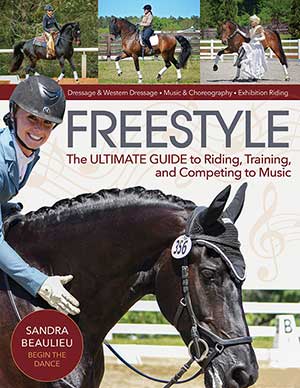
by Sandra Beaulieu
I believe that riding horses is similar to playing golf. It requires patience, body control, and the ability to focus. However, there is one big difference ... the golf club isn’t alive! There really isn’t much else that compares to riding a horse. Ballroom dancing is similar, perhaps more so if you imagine a partner who speaks a different language. Riding horses requires us to learn their language, adjust our natural reactions, and develop feel and timing.
When training a horse, you are dealing with an emotional animal that is so aware of body language it is as if he can read your mind. Music connects with humans on an emotional level and can affect us strongly. If we are affected in a positive way—our mood brightens or our energy is balanced—then the horse will feel the benefits of that as well.
Music can also improve the way we progress through the Training Scale—the six classical building blocks of horse training: rhythm, suppleness, contact, impulsion, straightness, and collection. Rhythm and tempo are at the “base” of the Training Scale, with the other building blocks progressively “stacked” upon them. Perhaps you have a young horse that is learning how to maintain a steady trot, or you are a beginner rider that is learning how to post. In these cases, music can regulate your body, helping you focus on a metronome-like beat in a fun way.
by Juliet M. Getty, Ph.D.
When we can offer a safe, caring home to a severely neglected horse, everyone in the horse world cheers. If you have recently adopted a rescue horse, let me first commend you for your actions. Saving a horse that is in desperate need of care and nursing him back to health can be one of the most gratifying experiences a horse owner can have. But you must be committed to giving him a lot of time and attention. The transition period is critical. He'll need to be moved in and out of pasture throughout the day, fed hay nearly every couple of hours, and given frequent supplemental meals until he gets to where he can hold his own.
If your horse is very thin due to starvation, you will want to proceed slowly and with caution, giving his body a chance to adjust to change with each step. Some horses are in such poor condition they are unable to eat. In this extreme situation, your veterinarian will use a stomach tube to feed the horse. This is a short term procedure with the goal of getting your horse interested in eating again.
Ulcers can complicate the rehabilitation process. Retired race horses almost invariably have ulcers. Your veterinarian may prescribe an ulcer medication, but this can only be used for a month or so. The three long term components of healing an ulcer are: chewing on hay or pasture at all times, plenty of water, and reduction in stress.
- Josh Lyons with Lyons Legacy Partner With Horses in Need
- Equine Disaster Preparation and Response
- Colostrum -- An Exceptional Superfood!
- What the Heck is PEMF Anyway?
- Deworming Your Horse? Reference this Comprehensive Q&A
- Equine Enteric Coronavirus
- Is Your Horse Protected Against These Disease Risks?
- Equine-Facilitated Psychotherapy: Facing Trauma With a Horse by Their Sides
- University of Kentucky’s Department of Veterinary Science Responds to Nocardioform Placentitis
- Odd Couples
- Born to Stretch — Long and Low
- Don’t Be So Hard On Yourself; 10 Ways to Stay Positive About Showing
- 3 Tips for Horse Riding With Epilepsy (and Confidence)
- Physical Signs of Damage Caused by Ill-Fitting Saddles
- Conception Failure in Mares: Seven Causes
- Horses Blink Less, Twitch Eyelids More When Stressed, U of G Researchers Find
- Maintain Your Horse’s Safety This New Year's Eve
- Caring for “Winter Woolies”
- Equestrian Programs Benefit Veterans
- New Allergens Associated with Severe Equine Asthma