




Health & Education
We all want the best care possible for our horses. The Heath & Education section covers both Learning Institutions, Organizations as well as many sources for equine assistance including Veterinarians and Farriers.
For those who want a to formally study horses, the Education section includes College Riding, Equine Studies, and Veterinary Schools. Learn about the wide variety of horses in the Horse Breeds section. Supplements and Treatments Therapy are also included in the section.
Everyone can learn from Fine Art and there are some specialty Museums that might surprise you.
Horses as a therapy partner enrich the lives of the disabled. These facilities are listed in our Therapeutic Riding section. To help children and young adults build confidence and grow emotionally, please see the resources available on the Youth Outreach page.
Looking for a place to keep your horse? You can find it in the Horse Boarding section. Traveling? Find a Shipping company or Horse Sitting service if your horse is staying home!
Want to stay up to date with the latest training clinics or professional conferences? Take a look at our Calendar of Events for Health & Education for the dates and locations of upcoming events.
Do we need to add more? Please use the useful feedback link and let us know!
While successful in her corporate career, Adina was struggling with feeling burned out, losing her spark and increasingly unmotivated. Deciding to get help, she attends a personal growth workshop incorporating horses to address her burnout.
Watch how the horses play a pivotal role in her self-discovery and transformation. Through a series of experiences with horses, Adina learns to focus on the present and develops a new sense of joy, connection, and meaningful purpose.
As part of our mission to spread awareness of the healing power of horses, we seek to share stories of transformation that illustrate the healing journey and personal growth people can experience through the involvement of horses in mental health programs and services.
Help us raise awareness of the power of horses by sharing this video and supporting the Seen Through Horses Campaign.
Read more: "Finding Her Voice" Story of Transformation | Seen Through Horses Campaign (3:02)
By Kentucky Equine Research Staff
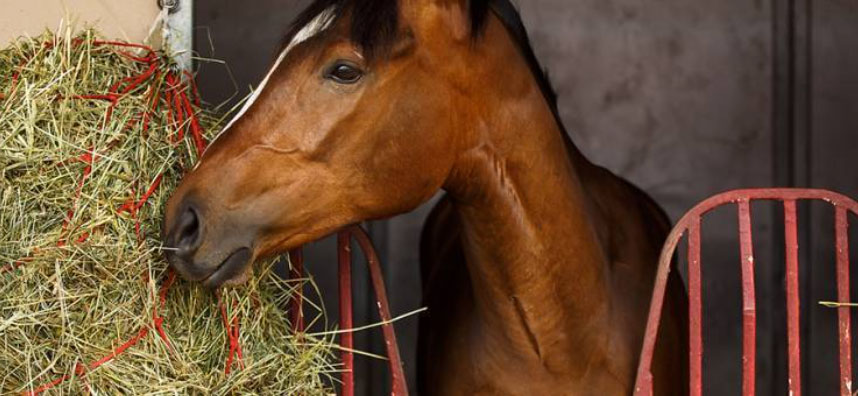
The digestive system of horses and ponies is designed to process forage for the majority of each day. With modern management practices, however, horses are often maintained in stalls and fed meals twice daily, which can be consumed in a few hours or less. Horses left without forage for more than four or five hours may develop gastrointestinal or behavioral problems.
One option for decreasing the amount of time a horse spends without forage is the use of slow feeders. A recent study showed that consumption time was up to 61% higher when ponies were given access to partially filled haynets than when fed hay on the ground.
Another study exploring the benefits of slow feeders tracked chewing patterns with various slow-feeding devices.* Those researchers hypothesized that haynets with smaller holes would increase chewing frequency compared with feeding on the ground. Chewing stimulates the production of saliva, which contains bicarbonate, a compound that buffers the acidity in the stomach. More chewing produces more bicarbonate.
“Horses continuously produce gastric acid but only produce saliva while they are chewing. Therefore, continuous chewing can help reduce the risk of gastric ulcers by producing bicarbonate in the saliva,” explained Ashley Fowler, Ph.D., a nutritionist for Kentucky Equine Research.
To test the hypothesis that haynets increase chewing and alter chewing dynamics, the researchers fitted eight horses with “chewing halters.” These devices recorded individual chews using a pressure sensor on the noseband. Horses were maintained in stalls and fed bermudagrass at 1.5% body weight twice daily at 8 a.m. and 4 p.m. The researchers calculated the number of chews per kilogram of hay, chewing duration (total time spent chewing per day), and the percent of chews completed in the first 120 and 240 minutes of feeding. Horses were fed using haynets with large holes, haynets with small holes, haynets with only a bottom hole, and unrestricted off the stall floor.
Contrary to the researchers’ hypothesis, the haynets did not increase chewing frequency. Horses fed from the small hole haynet, however, had a longer chewing duration than horses fed off the stall floor. Further, fewer chews were completed in the first 240 minutes of being fed for horses feeding from small hole haynets compared to haynets with a single bottom hole.
“This research shows that slow feeders do not increase the number of chews for a specific amount of hay, but the small hole haynet did lengthen the amount of time that the horse spent chewing. This study also found that the horses had an increased rate of consumption from the haynets with a single bottom hole, which means not all slow feeders are created equal and need to be carefully evaluated,” advised Fowler.
In addition to access to forage, another way of protecting the sensitive squamous region of the stomach from acid damage is by offering a product containing antacids and stomach-coating agents.
Fowler added, “The squamous, or upper, portion of the stomach has fewer protective mechanisms against acid compared to the glandular, or lower, portion of the stomach and is more susceptible to developing ulcers from acid splash. Along with stimulating alkaline saliva production, consuming forage also helps create a fiber mat in the stomach, providing a physical ‘splash-guard’ to stop the acid from spraying on the squamous mucosa.”
- Which Off-Track Thoroughbreds Are Most Desirable?
- Marguerite Henry and the Movies - book excerpt "Dear Readers and Riders: The Beloved Books, Faithful Fans, and Hidden Private Life of Marguerite Henry"
- Danger Zones with Julie Goodnight and Christy Landwehr
- 32 and You: An Owner's Guide to Genetic Tests in Horses (55:02) - Cornell Equine Seminar
- Poor Horse Behavior? It Could Be Pain Related
- The Power of Horses | Supporting Mental Health in Rural Communities (7:58)
- Tackling Thrush in Horses
- Addressing the Shortage of Equine Veterinarians: Nationwide Practices Join Together
- Rood & Riddle Stallside Podcast - Breaking Ground in Laminitis Research with Dr Andrew van Eps (38:13)
- Horse Miscarriages Offer Clues to Causes of Early Human Pregnancy Loss - Cornell Veterinary Medicine
- A 6-Step Guide to Keeping Your Horse Healthy
- Performing Treadmill Endoscopy at Rood & Riddle Equine Hospital (1:59)
- Rood & Riddle Stallside Podcast - Tall Fescue Woes: Insights on Endophyte Ingestion
- Rood & Riddle Stallside - Understanding Equine Biomechanics and Farriery with Dr Jenny Hagen
- Regenerative Medicine Therapies in Horses
- Educational Benefits of Equine-Assisted Learning Programs for Students
- Why is the Mule the Most Important Member of the Horse Family? Cornell Equine Seminar
- Five Tips for Keeping Your Horse Sound - Cornell Vet Equine Seminar Series
- Deworming the horse using a paste syringe with Teresa Kackert
- Stable Vices: Theirs or Ours? Abnormal Behavior in Horses