





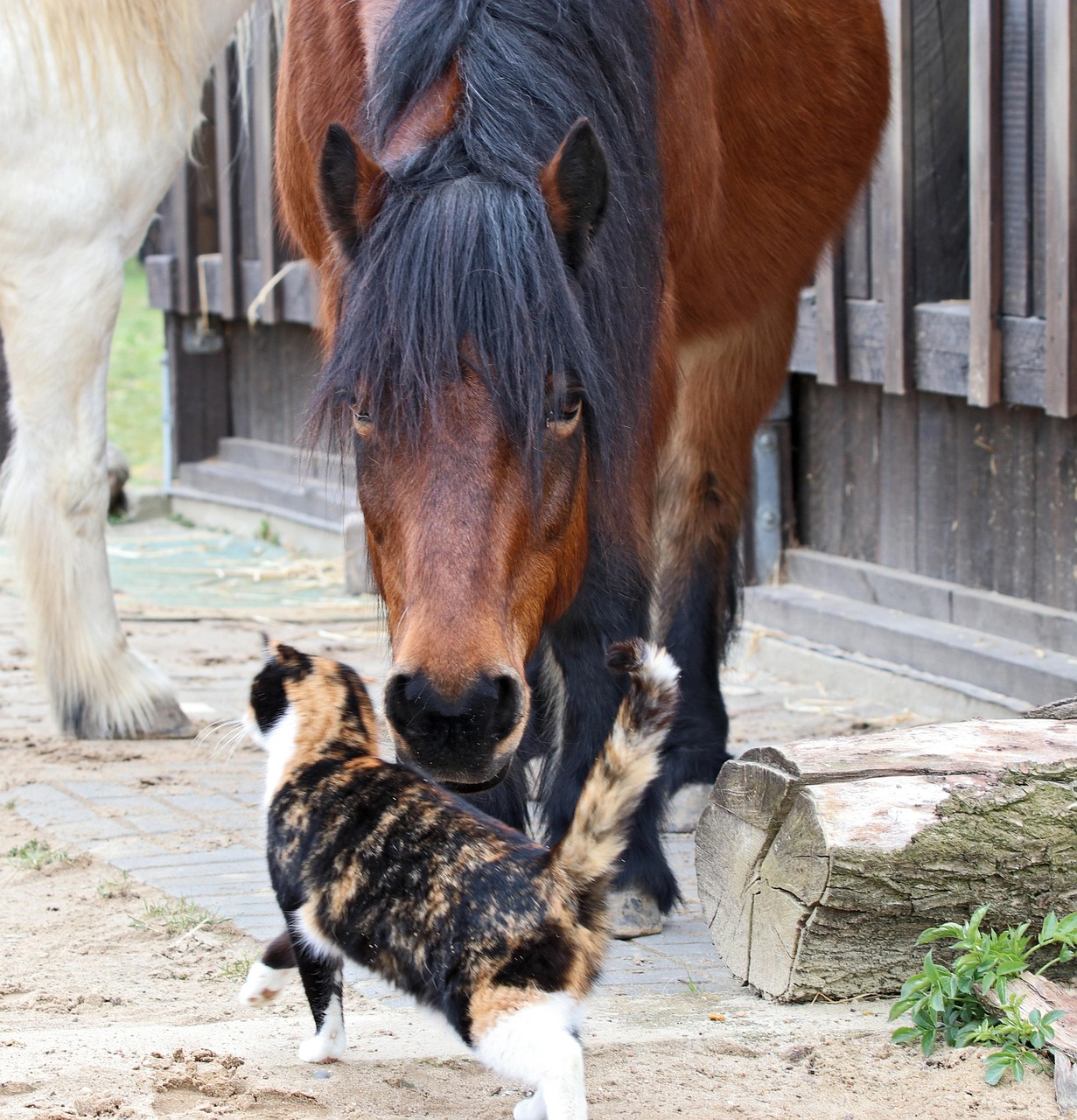
We were asked, “My horse doesn’t like the barn cats? Why is that and what can I do?”
The primary reasons a cat may dislike your horse are their difference in size and species, territorial instincts, and the specific personalities of both animals. A cat's cautious nature, especially if not socialized with large animals as a kitten, can make it wary or fearful of a horse.
Reasons for fear and dislike
- Instinctual fear of predators: Though a horse is a prey animal, its sheer size can trigger a cat's instinctual fear of larger creatures. A horse's sudden movements, snorts, and size can be startling and intimidating to a cat with no experience around them.
- Lack of socialization: A cat that was not properly introduced to horses and other large animals as a kitten may be overly fearful of them later in life. In contrast, many barn cats and horses form bonds, possibly because they grew up together and became accustomed to each other.
- Territorial behavior: Cats are naturally territorial and may feel threatened by a new animal, especially a large one. Your cat may perceive the horse as an intruder on its turf, leading to aggressive posturing like hissing, growling, or swatting.
- Personality clash: Not all animals get along, and it's possible that your cat and horse simply have a personality mismatch. Just as some horses are wary of small, fast-moving animals, some cats are more timid or aggressive than others.
Signs of horse disapproval
A horse that is uncomfortable around a cat may display several warning signs:
- Pinned ears: Ears laid flat back against the head are a clear signal of anger or annoyance.
- Head raised and snorting: This is a classic "alarmed" posture, indicating the horse is on high alert.
- Stamping feet or pawing: These actions signal frustration or an intent to threaten.
- Biting or kicking: In more severe cases, the horse may resort to physical aggression if it feels threatened or annoyed.
How to help them coexist
- Introduce them slowly: If your cat is a barn cat, it's essential to confine them in a crate or tack room for a few weeks to allow them to acclimate to the new smells and sounds. Let the cat see and smell the horses from a distance before any physical interaction.
- Allow escape routes: Make sure your cat always has a safe place to retreat if it feels threatened, such as a high ledge, an open tack room, or a cat tree. Never force an interaction.
- Reward calm behavior: Use treats to reward both animals when they react calmly to each other's presence. Reward your horse for peaceful curiosity and your cat for remaining relaxed.
- Consult a behavior expert: If your cat's fear or aggression is severe, consider consulting an animal behaviorist. They can help you create a specific plan to minimize stress and manage the cat's behavior.
We hope this helps everyone get along in the barn. Cats and horses may never be best friends, but with these suggestions they may lead a more peaceful existence together.
You can find more informative articles in our section on Recreation & Lifestyle. Take a look at our Curated Amazon Store for our selections in a wide variety of categories!
Are you interested in promoting your business or sharing content on EIE? Contact us at info@equineinfoexchange.com