



Health & Education
We all want the best care possible for our horses. The Heath & Education section covers both Learning Institutions, Organizations as well as many sources for equine assistance including Veterinarians and Farriers.
For those who want a to formally study horses, the Education section includes College Riding, Equine Studies, and Veterinary Schools. Learn about the wide variety of horses in the Horse Breeds section. Supplements and Treatments Therapy are also included in the section.
Everyone can learn from Fine Art and there are some specialty Museums that might surprise you.
Horses as a therapy partner enrich the lives of the disabled. These facilities are listed in our Therapeutic Riding section. To help children and young adults build confidence and grow emotionally, please see the resources available on the Youth Outreach page.
Looking for a place to keep your horse? You can find it in the Horse Boarding section. Traveling? Find a Shipping company or Horse Sitting service if your horse is staying home!
Want to stay up to date with the latest training clinics or professional conferences? Take a look at our Calendar of Events for Health & Education for the dates and locations of upcoming events.
Do we need to add more? Please use the useful feedback link and let us know!
by Dr. Eleanor Kellon
Vitamin C [ascorbate/ascorbic acid] is a water-soluble vitamin that functions as an important antioxidant and is needed for the synthesis of L-carnitine, catecholamines like epinephrine and dopamine, as well as collagen, the major protein in all connective tissues, including tendons and ligaments, even blood vessels. Deficiency causes a disease called scurvy, beginning as weakness and muscle pain, progressing to bleeding gums, loose teeth, poor healing and eventually mental changes and death.
Unlike humans, the horse can synthesize enough vitamin C in its body to prevent the development of a full-blown deficiency state (scurvy). However, the ability of this synthesis to maintain normal vitamin C levels and the role of dietary C is poorly understood. We do know that heavy exercise and chronic disease, especially lung disease, lead to decreased vitamin C blood levels in unsupplemented horses, as does stabling versus pasture access. Low blood levels have also been linked to poor wound healing in horses.
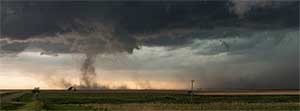
An Oklahoma State University assistant professor and Extension equine specialist shares disaster-preparation guidance for horse owners, as much of the country's Heartland prepares for severe, and possibly tornadic, weather
As the sirens wailed over Oklahoma City, the city took shelter as an F5 tornado continued its devastating path toward the nearby town of Moore.
“I sat in a room surrounded by friends and colleagues,” Oklahoma horse owner and Valley Vet Supply employee, Aimee Robinson said. “In unexplainable terror, we watched the local news as the tornado made its way closer toward us. It was heading right toward my horse’s boarding stable. There was nothing that I could do. ”
Among those whose lives were taken by the Moore tornado on May 20, 2013, were 150 horses unable to escape its mile-wide wrath.
“As soon as sirens let up, I drove as fast as I could to the barn, dodging downed trees and debris and parking more than a mile away, as close as I could get to our barn. I ran toward the affected area not knowing if my horse would be injured, or if she was even alive,” recalled Robinson. “I mentally prepared myself for the worst, and to my disbelief as I crested the final hill, our barn was still standing. Indefatigable was still there in her stall -- shaking, but alive. The training barn nearest to ours took a direct hit and lost everything.”
- Mild Equine Asthma Can Distinguish Winners from Losers on the Racetrack
- The Academic Equestrian: 10 Horse Personality Types
- Equine Temperament: Nature, Nurture or Both?
- Incorporating Mindfulness: Game Changer for Horse & Rider
- The Influence of Rider:Horse Bodyweight Ratio
- Debbie Roberts Loucks: The Big Power of Small Changes
- Study Suggests An ‘Emotional Transfer’ Between Humans & Horses
- Can Horses Really Smell Fear? Yes, And That’s Not All
- Boy with Autism Forms Incredible Bond with Horse After Being Bullied in School
- Horses can be affected by Zika virus, study shows
- You Are Not Alone: Mental Health in Our Equestrian Community
- Are Equine Infectious Disease Outbreaks Preventable? Are We Doing Enough?
- Horse Power: Equine Therapy for ADHD
- Colorado Women in Ranching: A spirit of nurturing, sustainability is alive at San Juan Ranch
- Do You Dare to Go Bare?
- Horse Health: Microchipping a Superior Form of Identification
- New Coat Colour in the Icelandic Horse
- Foal Q & A with Rood & Riddle’s Dr. Laurie Metcalfe
- The Equilume Light Masks Helps Pregnant Mares Foal on Time with Optimum Birth Weights
- Working with Horses to Develop Skills - Five Reasons Why It Works!